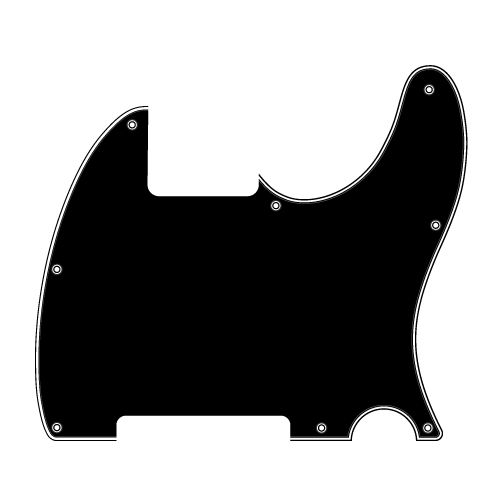
The Telecaster pickguard is a distinctive, usually partial, scratchplate for the Fender Telecaster electric guitar. They vary widely in color, material, ply (number of layers), and mounting hole configuration, which are key considerations when choosing a replacement or for a custom build.
- Telecaster pickguards have been made from various materials over the years. The materials used are often PVC plastic (the most common modern material), phenolic (used on early models), celluloid (often referred to as “nitrocellulose,” known to take on a “mint green” hue as it ages), and various other materials such as metal, wood, or leather.
Ply refers to the pickguard number of layers.
- Single-ply (1-ply): Typically seen on early "Blackguard" Telecasters and certain reissues.-
- Three-ply (3-ply): Such as W/B/W (White/Black/White) or B/W/B (Black/White/Black), which are the standard for most modern production.
- Four-ply (4-ply): Often used for pearloid or tortoise shell patterns for a layered look.
Mounting Hole Patterns
The Telecaster pickguard shape has remained largely consistent, but the screw hole count is critical for fitment. The two most common patterns are:
- Vintage 5-Hole: Used on original Telecasters and vintage reissues
.- Modern 8-Hole: The standard on most modern U.S. & Mexican made Telecasters since the late 1950s/early 1960s.
Note: There are variations in the placement of the holes even within these categories, so checking a template or ensuring compatibility with your specific guitar model (e.g., American Standard, Squier, Thinline) is important when purchasing.